
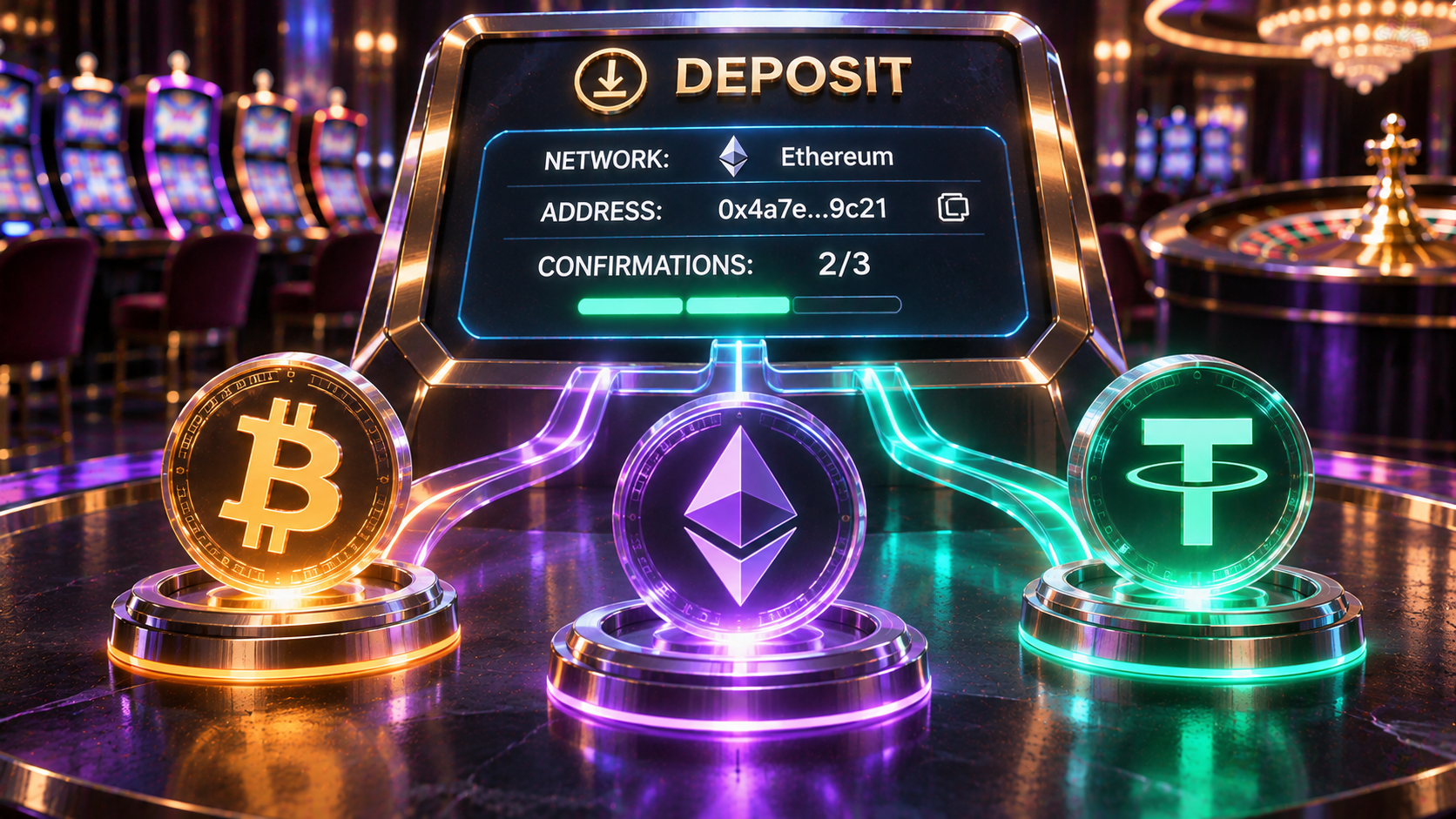
Crypto deposits move value from a personal wallet or trading platform to a casino address through a blockchain network. Pokie Pop, reviewed here, lists Bitcoin, Ethereum and USDT among its deposit options for Australian players. Each works differently. Bitcoin uses its own network. Ethereum deposits involve ETH on Ethereum. USDT is a token available across several blockchains, making the network choice especially important. Crypto payments reward careful reading. They punish autopilot with impressive efficiency.
A Crypto Deposit Begins With a Cashier Address
Select a supported cryptocurrency in the cashier, enter an amount where required. A receiving address appears, usually with a QR code. Some services add a memo or tag alongside it.
Open the wallet, pick the matching asset and paste or scan the details. Before hitting confirm: check the asset, network, address and amount against what the cashier shows. All four. Every time.
Once sent, the wallet broadcasts the transaction to the blockchain. The casino watches the address and waits for its required confirmation count. When confirmations arrive, the balance updates.
The Full Address. Not Just the Ends.
Blockchain transfers are final by design. A wrong address or unsupported network complicates things considerably. Support can investigate, but outcomes depend on the network and circumstances.
Copy the full address. When moving between devices, paste it into a text editor first and check the whole string. The first and last few characters are what clipboard-swapping malware targets. Boring caution wins here.
Bitcoin Deposits Use the Bitcoin Network
BTC goes to a Bitcoin address — one that starts with 1, 3, bc1q or bc1p depending on the format. The cashier specifies which formats it accepts.
The wallet adds a miner fee on top. That fee tracks transaction size and network demand, not the dollar amount being sent. Counterintuitively, a larger payment can sometimes carry a smaller fee if the transaction data is compact.
Confirmations come after each new block. Blocks average roughly ten minutes, though that varies. The casino sets its own threshold before crediting.
How Bitcoin, Ethereum and USDT deposits compare on the main practical details:
| Deposit detail | Bitcoin | Ethereum | USDT |
| Asset sent | BTC | ETH | USDT token |
| Network | Bitcoin | Usually Ethereum | Must match the named blockchain |
| Fee currency | BTC | ETH | Network coin, often ETH, TRX or another native asset |
| Confirmation style | Bitcoin blocks | Ethereum blocks | Blocks on the selected token network |
| Main check | Bitcoin address format | Ethereum address and gas | Token, network and address together |
| Price movement | Can move sharply | Can move sharply | Designed to track the American dollar |
Ethereum Deposits Require Gas in ETH
An Ethereum deposit sends ETH to an address beginning with 0x. The wallet calculates a gas fee for processing the transaction. That fee is paid in ETH and changes with network demand.
The wallet may show a maximum network fee before approval. The final amount charged can differ within the limits set by the transaction. During busy periods, a higher gas setting can help with quicker inclusion.
The casino usually credits ETH after a chosen number of confirmations. Ethereum blocks arrive much faster than Bitcoin blocks, though casino processing and security checks still affect the visible balance update.
ETH and Tokens Can Share an Address Format
Ethereum addresses look similar for ETH and ERC-20 tokens. That visual similarity can mislead a hurried player. Sending ETH and sending USDT on Ethereum are separate actions involving different assets.
The cashier choice should match the wallet asset exactly. An Ethereum address alone does not confirm that every token is accepted. The deposit page settles the question.
USDT Deposits Demand an Exact Network Match
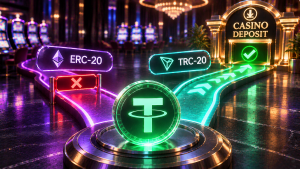
USDT is issued on several blockchain networks. A casino may support one USDT network, several networks or none for a particular account. Common labels include ERC-20, TRC-20 and other supported protocols.
The player selects the same network in the sending wallet and casino cashier. USDT sent through Ethereum and USDT sent through Tron are separate transfers on separate networks, even though the token name is identical.
Network fees also differ. An ERC-20 USDT transfer usually needs ETH for gas. A TRC-20 transfer generally needs TRX or network resources. A wallet holding only USDT may lack enough native currency to send it. Worth checking before initiating anything.
USDT Price Stability and Transfer Details Are Separate
USDT is designed to track the value of the American dollar, so its market price usually moves less than BTC or ETH. That price design is one feature of the token. Network matching, wallet setup, platform support and transfer accuracy are separate considerations that apply regardless.
A casino can display the credited value in Australian dollars, American dollars or a crypto unit. The conversion method and timing appear in the cashier or account terms. Stablecoin name, casino balance currency and withdrawal currency are three separate details worth checking once.
Minimum Deposits and Network Fees
Casino cashiers may set a minimum crypto deposit. A transfer below that threshold can require manual review or fall outside the standard crediting process. The minimum should be checked before the wallet sends anything.
Network fees deserve the same attention. A small Bitcoin or Ethereum transfer can carry a proportionally higher fee when network demand is elevated. The player pays the blockchain fee on top of the amount received by the casino.
A Test Transfer Confirms the Setup
For a first deposit to a new address, a small qualifying test transfer can confirm that the asset, network and address work together. The test still needs to meet the casino minimum and cover the network fee.
After the test is credited, re-open the cashier before sending a larger amount. Deposit addresses may change, expire or be generated fresh for each session. Using the current cashier address each time keeps the process clean.
A practical deposit sequence:
- Open the casino cashier and select the cryptocurrency.
- Read the supported network label.
- Check the minimum and maximum deposit amounts.
- Copy the current address and any memo or tag.
- Select the same asset and network in the wallet.
- Compare the full receiving details.
- Review the network fee and amount received.
- Send the transaction and save its transaction identifier.
- Track confirmations before contacting support.
The transaction identifier, often called a transaction hash or TXID, gives support a public reference for the blockchain transfer. It never reveals a wallet seed phrase or private key.
Confirmations and Casino Crediting Are Separate Stages
A transaction can appear on a blockchain before the casino balance changes. The casino may wait for additional confirmations, run account checks or process deposits in batches.
Bitcoin confirmation times vary with block discovery and fee demand. Ethereum and token networks have their own block timing. The operator chooses the number of confirmations it accepts for each asset.
Three statuses worth tracking separately: sent from the wallet, confirmed on the network and credited by the casino. A transaction marked complete by a wallet may still be waiting for the casino’s confirmation threshold.
If a qualifying deposit stays uncredited, useful details for support include the asset, network, amount, destination address, time and TXID. Support does not need the wallet seed phrase, private key or authentication code.
Crypto Prices Can Affect the Credited Value
BTC and ETH prices can move between the wallet confirmation and casino credit. The account may use the value at initiation, blockchain detection, confirmation or final credit, depending on the operator’s rules.
Conversion timing matters. The cashier or terms page explains the method used.
Network Matching Is the Core Rule
Same broad path for all three: cashier instructions, wallet approval, blockchain confirmation, casino credit. The differences are in the detail.
BTC on Bitcoin. ETH on Ethereum. USDT on whichever network the cashier names — plus the native fee asset that network requires. Get the network wrong and the token name stops mattering.
Cashier details, network label, full address, TXID saved. That is the whole routine. Crypto moves fast. The setup that works is the one done carefully before the first send.

